
HOW AIRCRAFT ENGINES WORK
Aeronautical and Aerospace industries are growing fast as the propulsion technology grows. Initially, aircraft flies propelled with piston engine which rotates the propeller. The need of higher flight altitude and faster vehicle pushed the propulsion technology development to make higher performance engine such as gas turbine propulsion which is widely used in commercial flight (boeing, airbus etc.) up to high performance jet fighter which flights in supersonic even hypersonic regime.
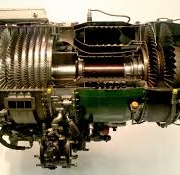
Then, how those engines work? To understand, first we will study the working principle of turbojet. Turbojet has four main components, there are inlet, compressor, combustion chamber (combustor), turbine and nozzle as shows in the picture below:

This is the explanations of how it works:
- Air form the front of the aircraft goes into the turbojet trough the inlet. This inlet act as diffuser, which is the part to slowing down the wind speed hence raising the pressure (Bernoulli equation). Need to know, the compressor works best when the wind comes into it at low speed, on the other hand high pressure is favorable for the combustion process.
- The low speed-high pressure air then goes into compressor to be compressed up to very high pressure. This pressure increase is very important for the combustion process in combustion chamber. The process of compression followed by temperature increase.
- High pressurized air then come into the combustion chamber, or combustor and mixed with fuel. Initially, this combustion process is triggered with spark plug and then continuously burned after it.
- This very high elevated temperature causes extremely high air expansion that could drive the turbine blade in the case of turbine gas propulsion which is turns with extremely high rpm. This turbine assembly is connected to compressor as explained above, hence make continuous energy extraction from the fuel to high speed gas.
- The high speed and high temperature gas from turbine then accelerated with nozzle by reducing its cross-section area. This accelerated gas creates the action and reaction forces called thrust to propel the engine or aircraft as a whole.
As for, to improve turbojet’s performance, some modifications are used such as:
- Afterburner
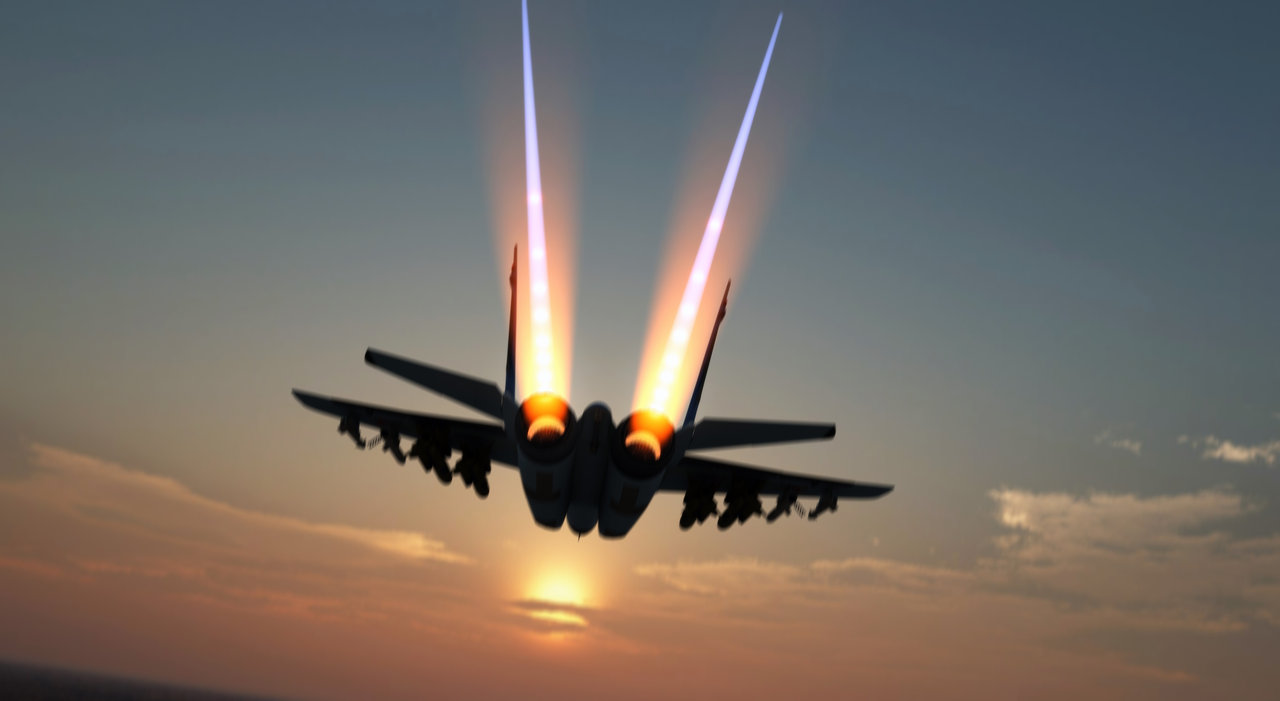
As explained above in the turbojet working principle, hot gas out from turbine has a lot of thermal energy to convert into kinetic energy (in the form of velocity) with the aid of nozzle. One mean to boost this thermal energy is to introduce the fuel after the gas pass through the turbine, and the combustion processes occur once more, also known as afterburner. Despite its effectiveness of increasing thrust energy, this way is wasting a lot of fuel.
- Turboprop
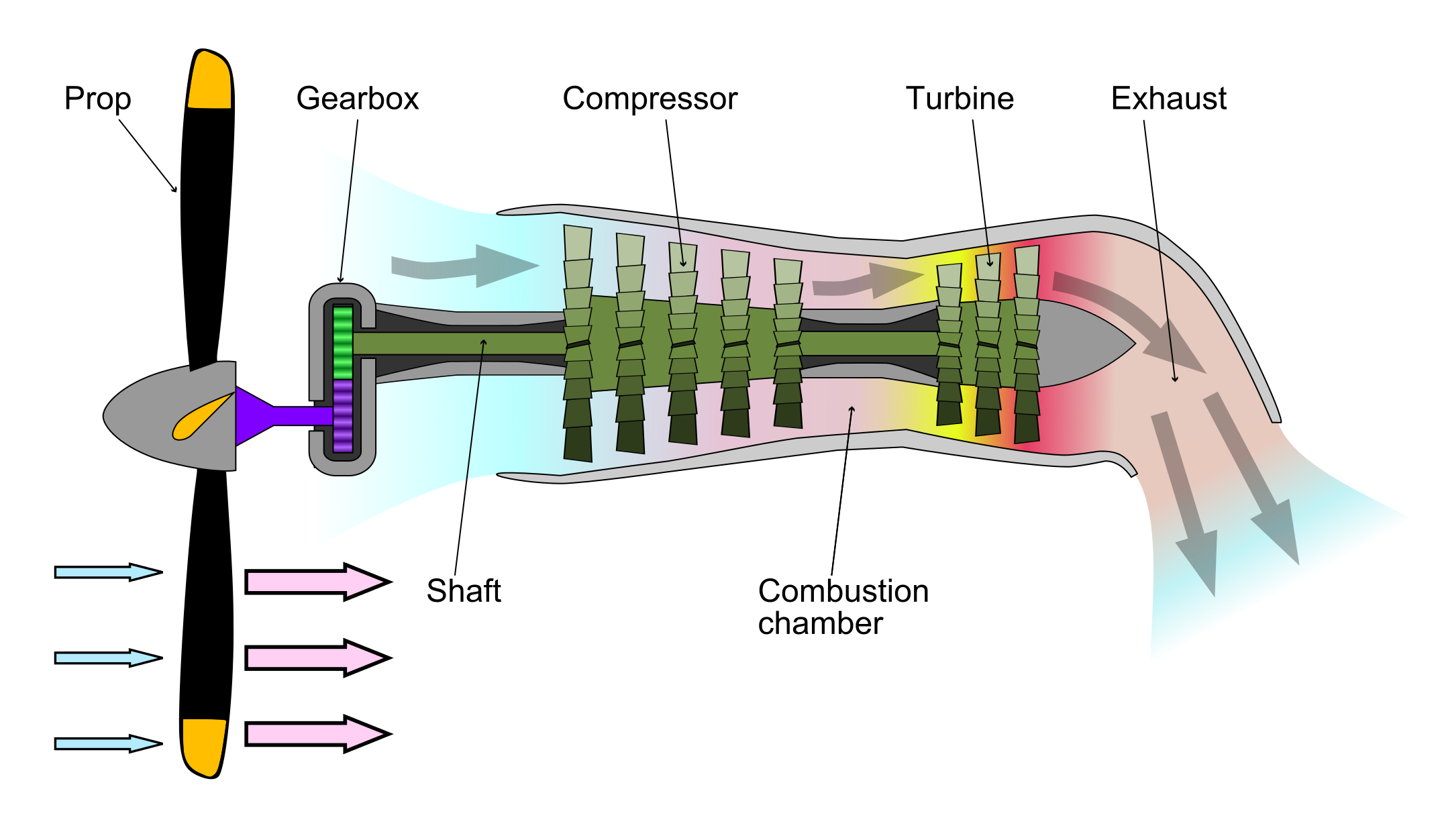
Other than to rotate the compressor, energy from turbine rotation sometimes extracted to rotate the propeller in front of the engine. This is done to improve engine efficiency for slow to medium speed flight. This kind of engine is used for medium speed and medium capacity aircraft.
- Turboshaft
Similar with turboprop, the turboshaft engine used the turbine rotation energy to rotates the shaft to generate the other forms of energy, such as electricity, actuators etc.
- Turbofan
This engine also similar with turboprop in principle. Fan is different with propeller in term of function, not just increases the wind pass through the engine, fan also increases air compression. On the other hand, the air pass through the fan divided by the air pass through the compressor also known as by-pass ratio. The Higher the by-pass ratio, the more efficient in the low speed the engine will be.
This kind of engine is widely used in commercial transport aircraft because it is ideal for medium speed with long range operation.

- Ramjet
Different from the engines stated above, ramjet does not have compressor-turbine coupling system. It’s just has inlet, combustion chamber and nozle. Ramjet commonly used for extremely high-speed flight, in such high speed, the very high-velocity air pass through the inlet converted into extremely high-pressure air which in turn can be used for combustion process without any means of compressor.

For the summary, there are no such “best engine” choices for all of the vehicle, but all are depending on its operating conditions.
To read other articles, click here.

aeroengineering.co.id is an online platform that provides engineering consulting with various solutions, from CAD drafting, animation, CFD, or FEA simulation which is the primary brand of CV. Markom.
commonly used materials for aerospace applications
As aerospace and aircraft technology develop to be more sophisticated, the need of more advance material improves as well. From the early beginning of wooden and aluminum aircraft, until the usage of titanium alloy and high-performance composite materials need intense development from a lot of scientific and engineering disciplines.
The use of light materials for aircraft are very important. For example, for transport sub-sonic aircraft, the payload only takes 20% of its total weight, however, its 80% consisted of its empty weight and fuel. It can be said that increasing its weight could improve the fuel usage, which is directly affects the operational cost.
These are the following considerations for aircraft materials selection:
- Static strength efficiency (strength to weight ratio)
- Fatigue characteristics
- Toughness and crack propagation characteristics
- Corrosion and embrittlement characteristics
- Environmental stability
Moreover, other important criteria which are important for production and manufacturing cost are:
- feasibility of the materials
- the materials cost
- Fabrication characteristics (easy to form, cut, mold, etc.)
Below are the following commonly used commercial aerospace materials:
- Aluminum alloy
For commercial flights, aluminum is used almost 80% of airplane’s structural materials. Aluminum in this context of course not the same as daily used aluminum for cooking devices or decorations. Aerospace grade aluminum alloyed (mixed) with some alloys such as copper, magnesium, zinc and manganese which improve its strength, stiffness as well as its toughness.
Bellow are commonly used commercial aluminum for aerospace application:
- Aluminum 2024-T3, T42, T351, T81: for high tensile applications, high toughness and good crack propagation characteristic. T42 has less strength than T3. While T81 commonly used for high temperature applications.
- Aluminum 2224-T3, 2324-T3: has 8% more strength than 2024, lower toughness, used for low tensile application. Has a good corrosion resistance
- Aluminum 7079: almost the same with 7075 but has better cross-sectional area properties (>3 inch)
- Aluminum 7150-T6: 11% stronger than 7075-T6, has better fatigue and toughness characteristics than 7075-T6.
- Aluminum 7178-T6, T651: used for compressive load. Stronger than 7075 but less toughness.
- Aluminum-lithium: 10% lighter and stiffer than conventional aluminum alloy.
- PM Aluminum: stronger, tougher, high temperature resistant, and more corrosion resistance than conventional aluminum.
- Titanium
Titanium material was not considered in the early of aerospace development because its chemical reactivity is very high and very hard to purify from its raw material as well as its fabrication characteristics are unfavourable. Despite its high machining cost, this material has strength per weight ratio higher than aluminium or steel. On the other hand, this material has superior corrosion resistance and high temperature resistance.
Its costly manufacturing cost restrict Titanium usage in the large production volume, hence just some few critical components are made of this material. Commonly used titanium in aerospace industry are Ti-6AI-4V and Ti-4AI-4Mo-2Sn-0.5Si
- Steel alloy
For some high tensile strength applications, steel alloy still a better choice compared with titanium or aluminium, especially for lower cost consideration. Below is the list of commonly used steel alloy in the aircraft industry:
- Martensitic stainless steel
Contains 12-18% of chromium and no nickel content then heat treated with quenching and tempering. Has a relatively low corrosion resistance.
Commonly used for kitchen utilities, turbine blade etc.
- Ferritic Stainless Steel
Contains 15-30% of chromium, without nickel and heat treatment hence has lower strength. Has good corrosion resistance at elevated temperature. Commonly used for piping, vessels and chemical industry.
- Austenitic stainless steel
Contains 18% or more chromium and 3,5 up to 22% of nickel. Stainless steel 321 and 347 contain titanium and columbion as stabilizer alloy for corrosion resistance. This material are very corrosion resistant even for salt water.
Commonly used for aerospace industry, chemical industry, piping and sea water applications.
- Precipitation Hardened Stainless Steel
Contains of very low carbon, 15-17% chromium, 4-7% nickel and a few amounts of other alloy elements. High corrosion resistance even for sea water applications. Commonly used for aircraft components which need high strength, corrosion and high temperature resistance.
- High strength low alloy steels
Iron-based material, which can be hardened to very hard condition. Commonly referred to 4130 and 4340 alloy material. These materials commonly used for frame and landing gear.
- Composite materials
Recently, composite materials are widely used in aerospace industry because of its superior strength and stiffness compared to its weight (which weight just like plastic). Moreover, the fiber direction could be engineered to optimize its strength and weight usage. From manufacturing point of view, this material could be shaped easily into aerodynamic shape more flexible compared to the other materials because the use of molding.
Commonly used aerospace composite materials are carbon fiber, boron, fiberglass and Kevlar. Not just those materials composition variables, aircraft structure sometimes combined the composite material with optimised sheet shape such as honey comb sheet to maximise stiffness to weight ratio. One of the restriction of composite material parts is the high initial cost for making the mold, but it will decrease significantly for high volume production.
To read other articles, click here.
aeroengineering.co.id is an online platform that provides engineering consulting with various solutions, from CAD drafting, animation, CFD, or FEA simulation which is the primary brand of CV. Markom.
Reference: Chun-yung Niu, M. 1989. “Airframe Structural Design : Practical Design Information and Data on Aircraft Structures”. Comlit Press. California