
Predicted Mean Vote (PMV) and Predicted Percentage of Dissatisfied (PPD) Calculator
Thermal comfort parameters
PMV & PPD Calculator
PMV: -
PPD: -
PPD: -
PMV and PPD are thermal comfort parameters commonly used to comply the design standards.
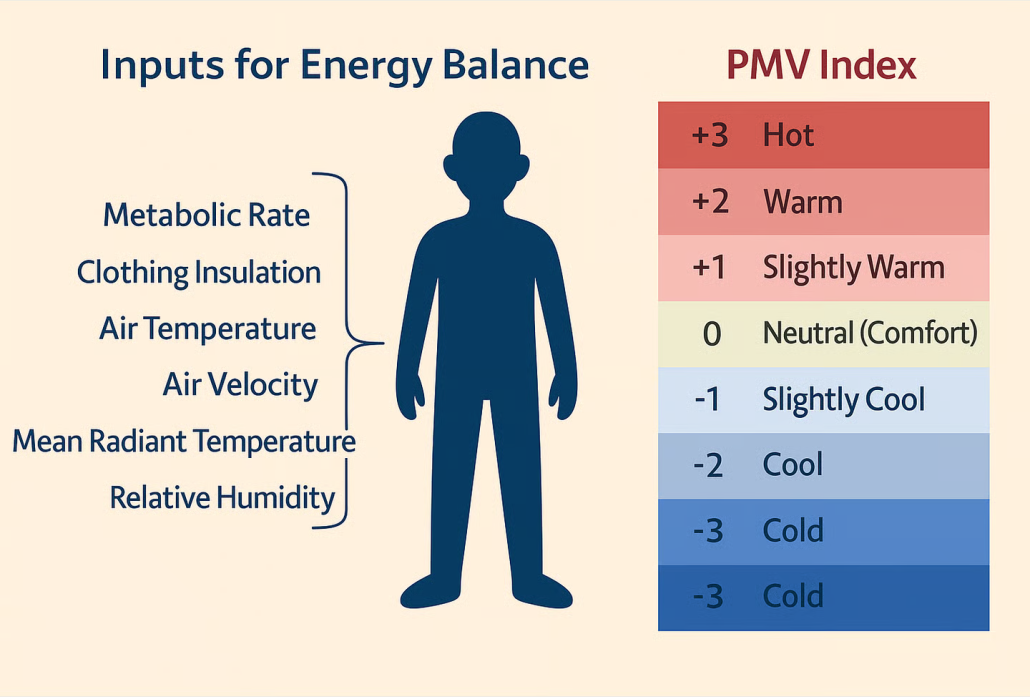
PMV (Predicted Mean Vote) is an index that predicts the average thermal sensation of a large group of people in a given environment.
It is based on the famous Fanger thermal comfort model and ranges from:
- -3 → Cold
- -2 → Cool
- -1 → Slightly cool
- 0 → Neutral (ideal comfort)
- +1 → Slightly warm
- +2 → Warm
- +3 → Hot
In practice, a PMV between -0.5 and +0.5 is considered thermally comfortable according to standards like ASHRAE 55.
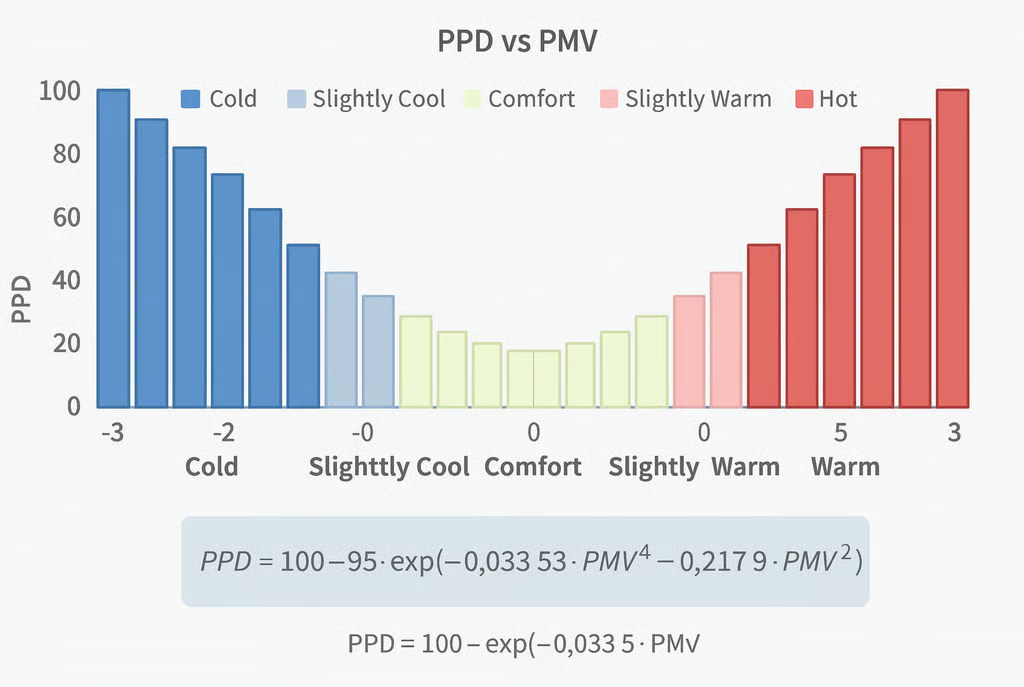
PPD (Predicted Percentage of Dissatisfied) estimates the percentage of people who are likely to feel uncomfortable.
- Even at perfect conditions (PMV = 0), about 5% of people may still feel uncomfortable.
- As PMV moves away from zero, PPD increases rapidly.
Typical benchmarks:
- PPD < 10% → Good comfort
- PPD < 20% → Acceptable in many cases
Typical Input Parameters for PMV/PPD
The PMV model combines human factors and environmental conditions:
Human Factors
| Parameter | Typical Value | Description |
|---|---|---|
| Metabolic Rate (met) | 1.0 – 1.2 | Sitting / office work |
| Clothing (clo) | 0.5 – 1.0 | Light to normal indoor clothing |
| External Work (met) | 0 | Usually negligible |
For more detailed and accurate thermal comfort evaluation, especially in complex indoor environments, simplified PMV/PPD calculations may not be sufficient. In such cases, it is recommended to perform simulations using actual room geometries, including walls, windows, equipment, and airflow distributions. By using tensorHVAC-Pro, you can model realistic conditions such as non-uniform temperature fields, localized air velocity, and radiant heat effects from surrounding surfaces. This enables a more precise prediction of occupant comfort, ensuring better HVAC design decisions and optimized indoor environmental quality.